Liucija Dervinyte
liucija.de@outlook.comBio
Liucija Dervinytė is a visual artist and curator whose practice unfolds along these two parallel paths, both rooted in the same question: how can art build connections between people and their environment, between culture and nature, between intuition and rationality.
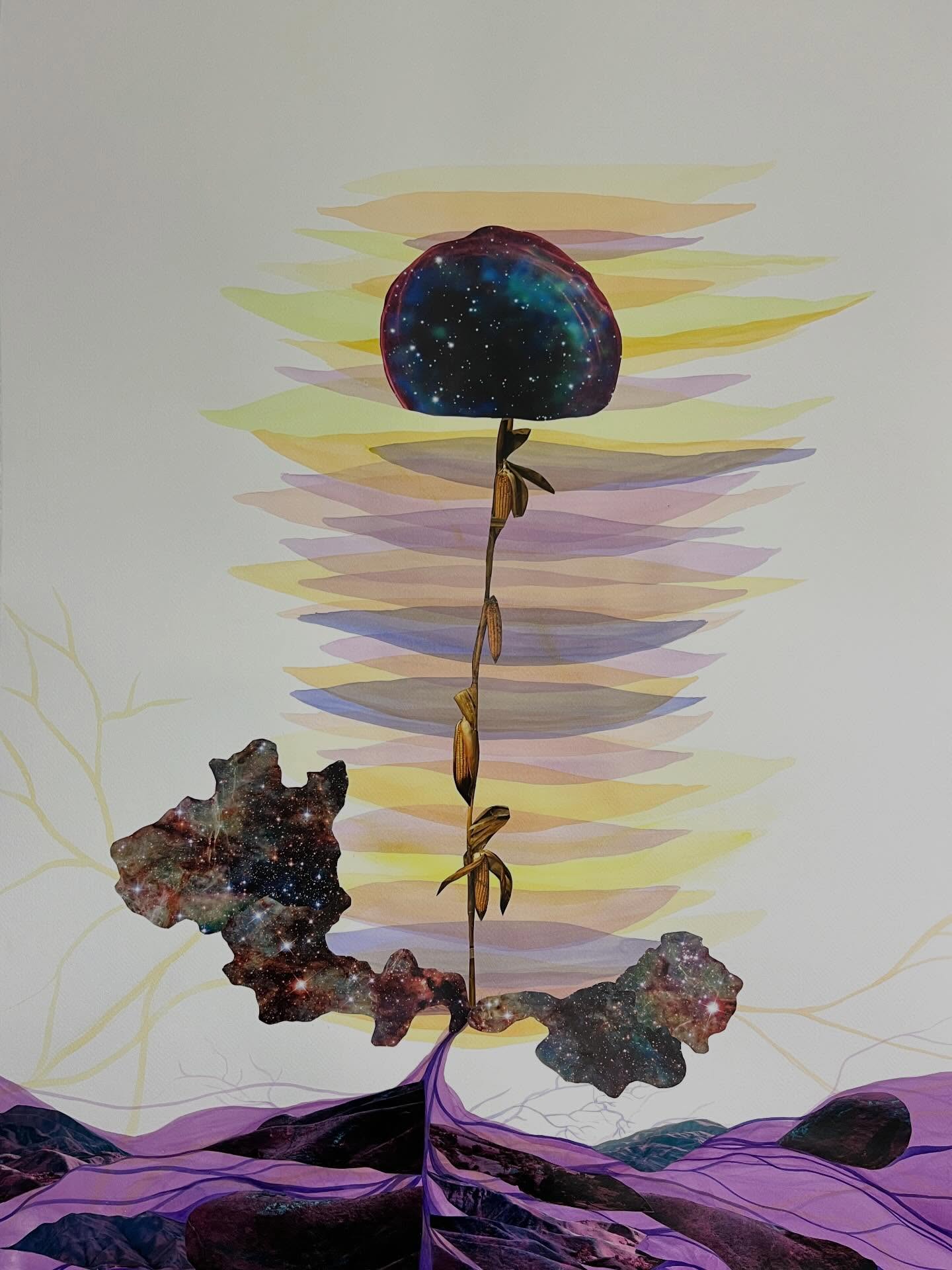
In her artistic practice, she works with textile, collage, painting, video, and participatory methods, exploring ecological systems, consumer culture, and the traces human activity leaves on the world. Key projects include Stitched Conversations (ongoing since 2021), a collective embroidery project in which slow making and conversations about ecology become inseparable, and Ryšių rizoma, an artistic research presented at the VDA graduation show (MA) in Vilnius (2023). Her work has been shown in solo and group exhibitions in Lithuania, the USA, and Mexico, including the travelling exhibition Earth Tales (2022).
In her curatorial practice, she creates spaces for dialogue and collective thinking. From 2017 to 2024, she was co-founder, curator, and director of the independent cultural space Ideas Block, where she organised exhibitions, artist residencies, and interdisciplinary projects. She continues to expand her curatorial work into new contexts, raising questions about the intersections of art, nature, and society.
Statement
What does it mean to be part of nature, rather than apart from it? This is the central question of my artistic and curatorial practice.
Through textile, collage, painting, video, and participatory practice, I explore the entangled relationships between human experience, cultural systems, and the living world. Each medium offers a different entry point. Collage assembles fragments of the human–nature relationship and the ecological systems that surround us. Painting opens a space for intuition and inner states, and how these shape the way I connect to the environment. This inner attentiveness leads me outward, to our collective materials, worn textiles that hold traces of personality, of what we consume and what we leave behind. Together, these practices become a way of mapping our entanglement with the world.
This same thread runs through my curatorial work. Exhibitions, conversations, and collective making are, for me, ways of thinking together – spaces where difficult questions about our relationship with nature can be held openly. Whether I am making or curating, I am asking the same thing: how do we find our place within a world that is larger than ourselves?